Alexa crashed on Christmas Day

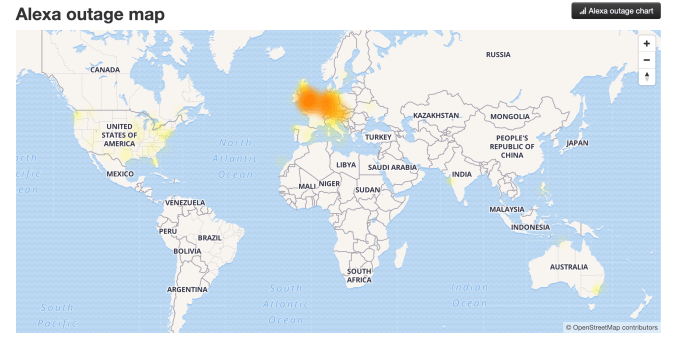
Amazon this morning said its Alexa devices were among the holiday season’s best-sellers, particularly the Echo and Echo Dot. But the influx of new users setting up their devices for the first time on Christmas Day appeared to be more than Alexa could handle. The service crashed briefly on Christmas, as thousands of new Alexa device owners tried to connect their Echo to Amazon’s servers around the same time.

The Guardian first reported the Alexa outage, which began around 10 AM GMT and led existing Echo owners to complain they were unable to use their devices for regular tasks like playing music or smart home controls, for example.

Others said they were unable to set up their device, despite not having any other internet or home Wi-Fi issues, which seemed to point to a server-side outage.

Amazon’s Twitter account noted the issues were isolated to Europe, saying at 8:43 AM EST (1:43 PM GMT): “Over the past two hours some Echo devices in Europe have had intermittent connections.” The outage was resolved by the time the account had responded, meaning it had only lasted a couple of hours.

An Amazon spokesperson also confirmed the outage to TechCrunch.

“For a short period yesterday morning we had an issue that intermittently impacted some Alexa customers’ ability to interact with the service,” the spokesperson said. “The Alexa service is now operating normally.”

Amazon declined to offer details on what caused the outage, or explain how it was resolved. Likely, it was related to the increased number of requests. The Alexa app shot to the top of the App Store and Google Play on Christmas — another signal that points to a large number of first-time Echo owners setting up new devices on the holiday.

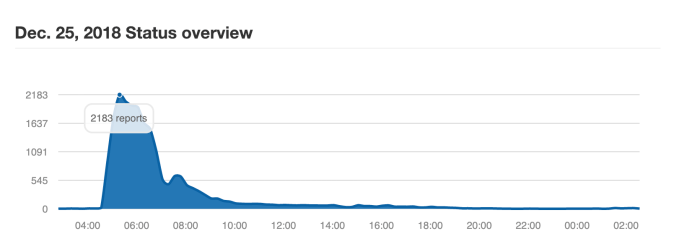
The website Down Detector also spotted troubles with Alexa that impacted Europe, with a peak of 2,183 reports coming in at the height of the outage. The reports then tapered off a couple of hours later.

This isn’t Alexa’s first outage by any means, nor even its first this year. The service can become unresponsive at times, either due to server issues or overloads. In March, for example, the voice service went down even while the Alexa mobile app still worked.

And in September, Alexa went down across Europe, apparently related to an AWS outage in Ireland. That was followed by a U.S. outage the following month, which led the assistant to respond to requests with “sorry, something went wrong.”

Europe is a growing market for Alexa, with Amazon having introduced its smart speaker to Italy and Spain this June. Alexa’s other international markets include the U.K., Australia, India, New Zealand, Germany, Japan and Ireland.


Go to Source
Author: Sarah Perez

SpaceX’s Starship goes sci-fi shiny with stainless steel skin

SpaceX’s futuristic Starship interplanetary craft may embody the golden age of sci-fi in more ways than one: in addition to (theoretically) taking passengers from planet to planet, it may sport a shiny stainless steel skin that makes it look like the pulp covers of old.

Founder and CEO Elon Musk teased the possibility in a picture posted to Twitter, captioned simply “Stainless Steel Starship.” To be clear, this isn’t a full-on spacecraft, just part of a test vehicle that the company plans to use during the short “hopper” flights in 2019 to evaluate various systems.

As with most Musk tweets, this kicked off a storm of speculation and argument in the Twitterverse.

The choice surprised many because for years, modern spaceflight has been dependent on advanced composite materials like carbon fiber, which combine desirable physical properties with low weight. When metal has been required, aluminum or titanium are much more common. While some launch components, like the upper stage of the Atlas 5 rocket, have liberally used steel, it’s definitely not an obvious choice for a craft like the Starship, which will have to deal with both deep space and repeated reentry.

As Musk pointed out in subsequent comments, however, stainless steel has some advantages versus other materials when at extremely hot or cold temperatures.

This is a special full-hardness steel alloy mentioned as being among the 300 series of high-strength, heat-resistant alloys — not the plentiful, pliable stuff we all have in our kitchens and buildings. Musk also mentioned another “superalloy” called SX500 that SpaceX’s metallurgists have developed for use in the Raptor engines that will power the vehicle.

So why stainless? It’s likely all about reentry.

Many craft and reusable stages that have to face the heat of entering the atmosphere at high speed use “ablative” heat shielding that disintegrates or breaks away in a controlled fashion, carrying heat away from the vehicle.

It’s unlikely this is a possibility for Starship, however, as replacing and repairing this material would necessitate downtime and crews wherever and whenever it lands, and the craft is meant to be (eventually) a quick-turnaround ship with maximum reusability. Heat shielding that reflects and survives is a better bet for that — but an enormous engineering problem.

Scott Manley put together a nice video illustrating some of these ideas and speculations in detail:

Musk said before of the Starship (then still called BFR) that “almost the entire time it is reentering, it’s just trying to brake, while distributing that force over the most area possible.” Reentry will probably look more like a Space Shuttle-esque glide than a Falcon 9 first stage’s ballistic descent and engine braking.

The switch to stainless steel has the pleasant side effect of making the craft look really cool — more in line with sci-fi books and comics than their readers perhaps ever thought to hope. Paint jobs would burn right off, Musk said:

You can’t expect it to stay shiny for long, though; it may be stainless, but like a pan you left on the stove, stainless steel can still scorch, and the bottom of the Starship will likely look pretty rough after a while. It’s all right — spacecraft developing a patina is a charming evolution.

Details are still few, and for all we know SpaceX could redesign the craft again based on how tests go. Next year will see the earliest hopper flights for Starship hardware and possibly the Super Heavy lower stage that will lift its great shiny bulk out of the lower atmosphere.

The technical documentation promised by Musk should arrive in March or April, but whether it will pertain solely to the test vehicle or give a glimpse at the craft SpaceX intends to send around the moon is anyone’s guess. At any rate you should expect more information to be spontaneously revealed before then at Musk’s discretion — or lack thereof.


Go to Source
Author: Devin Coldewey

Bellabeat’s new hybrid smartwatch tracks your stress…and goes with your outfit

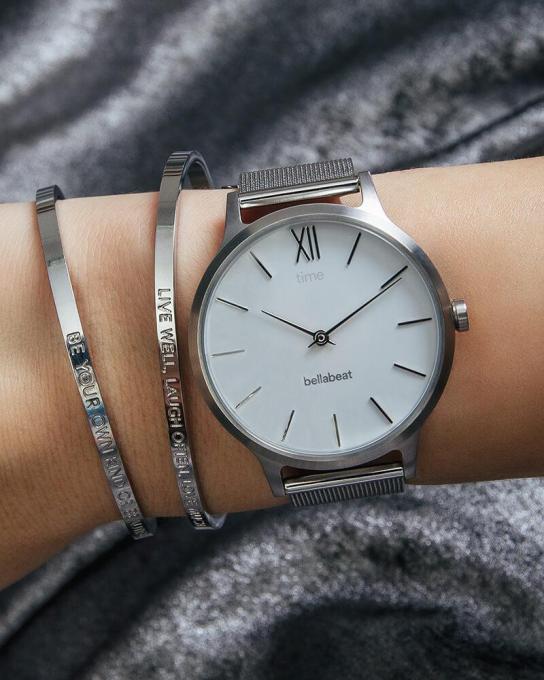
Bellabeat, the company behind a variety of health and wellness wearable devices aimed at women, is now selling its first smartwatch. The device, which is simply called “Time,” was announced earlier this month right in the midst of holiday shopping season. Like other fitness trackers, the watch is capable of basic tasks like counting your steps, tracking sleep patterns and reminding you to move. But unlike traditional smartwatches — which, aesthetically, are still very much just a screen on your wrist — the Time is designed to look like jewelry.

The hybrid device looks like a watch — albeit not a very expensive one.

It’s squarely in the range of fashion jewelry, with either silver or rose gold stainless steel finishes to choose from, and a minimalist watch face that forgoes complications like the date or the moon phase, for example. It even lacks a second hand.

That said, I prefer its cleaner look-and-feel to the gaudier smartwatches put out by brands like Michael Kors and Fossil. (Plus, there’s no Android Wear/Wear OS to contend with here.)

As an analog watch, it has both its pros and cons.

It’s designed to be hypoallergenic so as not to irritate those with sensitive skin, and it has some water resistance. (ATM grade 3, meaning it can withstand a vigorous hand washing and the rain. You can’t swim, bathe or dive with it.)

You also don’t have to charge it, which makes it feel more like a “real” watch than a gadget.

However, there’s a potential downside here, too — the coin cell battery only lasts “up to” six months. You’ll then need to use the tiny tool it ships with to replace the old battery with a new one.

Of course, some will see a user-replaceable battery as a perk. I don’t, but that’s a personal preference on my part.

I much prefer just dropping my Apple Watch onto a charger rather than having to keep up with a small watch tool, which can be easy to lose or misplace in the time between repairs. I’m also not a fan of having to unscrew tiny screws and then finding some sort of small, sharp object to pop out the battery. Perhaps that’s because I have a child with a dozen or so battery-operated toys. I’m constantly unscrewing things to replace batteries, and frankly I don’t need another.

In any event, among the watch’s better aspects is the fact that it packages up fitness and wellness tracking in a device that passes as a regular — and even fairly attractive — piece of fashion jewelry. The Time will go better with some of your outfits where you just don’t think the Apple Watch works — even with one of Apple’s fancier bands.

Of course, it’s not as seamless to use Time as the Apple Watch, which has the Apple platform advantage. (Or an Android smartwatch paired with an Android phone, for that matter.)

Instead, you have to sync your activity between the watch and the third-party Bellabeat app to view things like the steps taken or hours slept. You do so by tapping a sync button in the app and double-tapping on the watch face.

The app can also serve as way to keep up with other aspects of your health and wellness, including your hydration goals, stress, meditation time and your period.

The stress metrics are calculated for you, based on factors like activity levels, sleep quality, reproductive health and meditation over the past week. But hydration and menstruation have to be logged manually (*unless you’re using Bellabeat Spring — see below.)

The mediation tracking only calculates your progress through the app’s own selection of more than 30 included exercises. While it’s nice to have access to those resources included in the app, many people are already using popular meditation apps like Calm or Headspace. An “import” option for externally logged “mindful minutes” would have been nice here.

One of Time’s better features are its silent alarms and inactivity alerts. Instead of pings and loud noises, the watch more calmly reminds you of things with vibrations you configure. There are also included alarms for waking up, taking your vitamins, taking your contraception pill and another general alarm setting, each with their own toggle switches and settings.

There is something to be said for a quieter smartwatch, especially if stress levels are a concern. (There’s also something to be said for a device that’s built by a woman with the needs of women in mind. Remember how long it took for Apple to realize period tracking was a thing?)

That said, it’s unfortunately becoming harder for smaller device makers to compete with the Apple Watch, which has now moved into advanced areas with its Series 4 line, with sports, life-saving ECG and fall detection features, along with smarter workout detection (and yes, you can still swim with it), plus its ability to work with the broader iOS app ecosystem in a more native way.

But the Apple Watch is pricier at $399 and up for current models. Bellabeat’s Time, by comparison, is $179.

The Bellabeat mobile app will work with other Bellabeat products, including its wellness tracker Leaf (which can be worn as a bracelet, necklace, clip, etc.), and $59 smart water bottle, Spring.

Combined, the Spring and Time could be a good entry point into the world of fitness and wellness trackers for those who never felt that wearables and trackers were right for them. Bellabeat’s line is more of a lifestyle choice based just as much on looks as on tech, if not more so.

The question now is whether or not Bellabeat can carve out a big enough slice of the smartwatch market, which continues to be dominated by Apple, to sustain itself in the years ahead.

Bellabeat was a Y Combinator 2014 grad founded by female entrepreneur Urska Srsen, and has raised ~$19 million to date, according to Crunchbase. It previously sold products for expectant mothers, as well, but those have been phased out. Bellabeat declined to share any user metrics or revenue figures, when asked.


Go to Source
Author: Sarah Perez

How Juul made vaping viral to become worth a dirty $38 billion

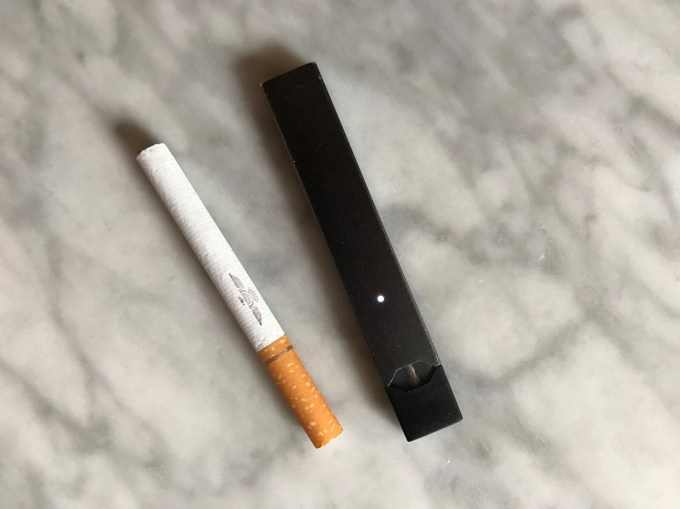
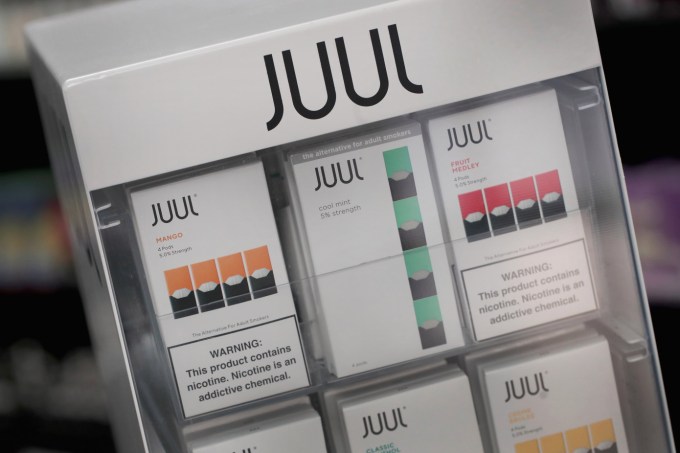
A Juul is not a cigarette. It’s much easier than that. Through devilishly slick product design I’ll discuss here, the startup has massively lowered the barrier to getting hooked on nicotine. Juul has dismantled every deterrent to taking a puff.

The result is both a new $38 billion valuation thanks to a $12.8 billion investment from Marlboro cigarettes-maker Altria this week, and an explosion in popularity of vaping amongst teenagers and the rest of the population. Game recognize game, and Altria’s game is nicotine addiction. It knows it’s been one-upped by Juul’s tactics, so it’s hedged its own success by handing the startup over a tenth of the public corporation’s market cap in cash.

Juul argues it can help people switch from obviously dangerous smoking to supposedly healthier vaping. But in reality, the tiny aluminum device helps people switch from nothing to vaping… which can lead some to start smoking the real thing. A study found it causes more people to pick up cigarettes than put them down. It estimated that in 2015, 2,070 cigarette-smoking adults quit with help from vaping, but 168,000 teens and young adults who used e-cigarettes eventually started smoking real cigarettes daily.

Photographer: Gabby Jones/Bloomberg via Getty Images

How fast has Juul swept the nation? Nielsen says it controls 75 percent of the U.S. e-cigarette market, up from 27 percent in September last year. In the year since then, the CDC says the percentage of high school students who’ve used an e-cigarette in the last 30 days has grown 75 percent. That’s 3 million teens, or roughly 20 percent of all high school kids. CNBC reports that Juul’s 2018 revenue could be around $1.5 billion.

The health consequences aside, Juul makes it radically simple to pick up a lifelong vice. Parents, regulators and potential vapers need to understand why Juul works so well if they’ll have any hope of suppressing its temptations.

Shareable

It’s tough to try a cigarette for the first time. The heat and smoke burn your throat. The taste is harsh and overwhelming. The smell coats your fingers and clothes, marking you as smoker. There’s pressure to smoke a whole one lest you waste the tobacco. Even if you want to try a friend’s, they have to ignite one first. And unlike bigger box mod vaporizers where you customize the temperature and e-juice, Juul doesn’t make you look like some dorky hardcore vapelord.

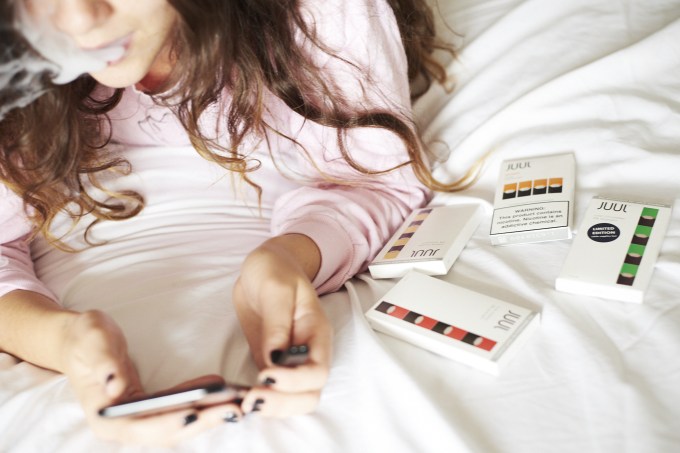
Juul is much more gentle on your throat. The taste is more mild and can be masked with flavors. The vapor doesn’t stain you with a smell as quickly. You can try just a single puff from a friend’s at a bar or during a smoking break with no pressure to inhale more. The elegant, discrete form factor doesn’t brand you as a serious vape user. It’s casual. Yet the public gesture and clouds people exhale are still eye-catching enough to trigger the questions, “What’s that? Can I try?” There’s a whole other article to be written about how Juul memes and Instagram Stories that glamorized the nicotine dispensers contributed to the device’s spread.

And perhaps most insidiously, vaping seems healthier. A lifetime of anti-smoking ads and warning labels drilled the dangers into our heads. But how much harm could a little vapor do? Well, nicotine and other chemicals in the vapor can impair blood vessel dilation, increase arterial stiffness, increase blood pressure and heart rate and hurt the lungs by being toxic to alveolar macrophage. Even if it’s not as bad as cigarettes, vaping is still dangerous, and it doesn’t necessarily stop people from burning tobacco.

A study found only 10 percent of former smokers who turned to vaping had actually quit cigarettes after a year. My friend who had never smoked tells me he burns through a full Juul pod per day now. Someone got him to try a single puff at a nightclub. Soon he was asking for drags off of strangers’ Juuls. Then he bought one and never looked back. He’d been around cigarettes at parties his whole life but never got into them. Juul made it too effortless to resist. 

Concealable

Lighting up a cigarette is a garish activity prohibited in many places. Not so with discreetly sipping from a Juul.

Cigarettes often aren’t allowed to be smoked inside. Hiding it is no easy feat and can get you kicked out. You need to have a lighter and play with fire to get one started. They can get crushed or damp in your pocket. The burning tip makes them unruly in tight quarters, and the bud or falling ash can damage clothing and make a mess. You smoke a cigarette because you really want to smoke a cigarette.

Public establishments are still figuring out how to handle Juuls and other vaporizers. Many places that ban smoking don’t explicitly do the same for vaping. The less stinky vapor and more discreet motion makes it easy to hide. Beyond airplanes, you could probably play dumb and say you didn’t know the rules if you did get caught. The metal stick is hard to break. You won’t singe anyone. There’s no mess, need for an ashtray or holes in your jackets or couches.

As long as your battery is charged, there’s no need for extra equipment, and you won’t draw attention like with a lighter. Battery life is a major concern for heavy Juulers that smokers don’t have worry about, but I know people who now carry a giant portable charger just to keep their Juul alive. But there’s also a network effect that’s developing. Similar to iPhone cords, Juuls are becoming common enough that you can often conveniently borrow a battery stick or charger from another user. 

And again, the modular ability to take as few or as many puffs as you want lets you absent-mindedly Juul at any moment. At your desk, on the dance floor, as you drive or even in bed. A friend’s nieces and nephews say that they see fellow teens Juul in class by concealing it in the cuff of their sleeve. No kid would be so brazen as to try to smoke a cigarette in the middle of a math lesson.

Distributable

Gillette pioneered the brilliant razor and blade business model. Buy the sometimes-discounted razor, and you’re compelled to keep buying the expensive proprietary blades. Dollar Shave Club leveled up the strategy by offering a subscription that delivers the consumable blades to your door. Juul combines both with a product that’s physically addictive.

When you finish a pack of cigarettes, you could be done smoking. There’s nothing left. But with Juul you’ve still got the $35 battery pack when you finish vaping a pod. There’s a sunk cost fallacy goading you to keep buying the pods to get the most out of your investment and stay locked into the Juul ecosystem.

(Photo by Scott Olson/Getty Images)

One of Juul’s sole virality disadvantages compared to cigarettes is that they’re not as ubiquitously available. Some stores that sells cigs just don’t carry them yet. But more and more shops are picking them up, which will continue with Altria’s help. And Juul offers an “auto-ship” delivery option that knocks $2 off the $16 pack of four pods so you don’t even have to think about buying more. Catch the urge to quit? Well you’ve got pods on the way so you might as well use them. Whether due to regulation or a lack of innovation, I couldn’t find subscription delivery options for traditional cigarettes.

And for minors that want to buy Juuls or Juul pods illegally, their tiny size makes them easy to smuggle and resell. A recent South Park episode featured warring syndicates of fourth-graders selling Juul pods to even younger kids.

Dishonorable

Juul co-founder James Monsees told the San Jose Mercury News that “The first phase is proving the value and creating a product that makes cigarettes obsolete.” But notice he didn’t say Juul wants to make nicotine obsolete or reduce the number of people addicted to it.

Juul co-founder James Monsees

If Juul actually cared about fighting addiction, it’d offer a regimen for weaning yourself off of nicotine. Yet it doesn’t sell low-dose or no-dose pods that could help people quit entirely. In the U.S. it only sells 5 percent and 3 percent nicotine versions. It does make 1.7 percent pods for foreign markets like Israel, where that’s the maximum legal strengths, though refuses to sell them in the States. Along with taking over $12 billion from one of the largest cigarette companies, that makes the mission statement ring hollow.

Juul is the death stick business as usual, but strengthened by the product design and virality typically reserved for Apple and Facebook.


Go to Source
Author: Josh Constine

The best and worst gadgets of 2018

There were countless gadgets released in 2018. It’s the end of the year, so Brian and I rounded up the best of the best and the worst of the worst.

Some where great! Like the Oculus Go. Or the Google Home Hub. But some were junk, like the revived Palm or PlayStation Classic.

CES 2019 is a few weeks away, where manufacturers will roll out most of their wares for the upcoming year. But most products will not be available for purchase for months. What follows is a list of the best and worst gadgets available going into 2019.

The Best
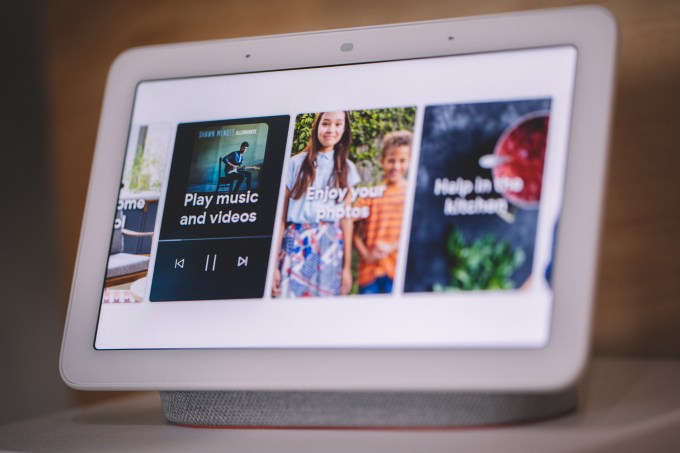
Google Home Hub

Google took its sweet time bringing an Echo Show competitor to market. When the Home Hub did finally arrive, however, the company lapped the competition. The smart screen splits the size difference between the Echo Spot and Show, with a form factor that fits in much more comfortably in most home decor.

Assistant still sports a much deeper knowledge base than Alexa, and the Hub offers one not so secret weapon: YouTube. Google’s video service is light years ahead of anything Amazon (or anyone, really) currently offers, and the competition shows no sign of catching up.
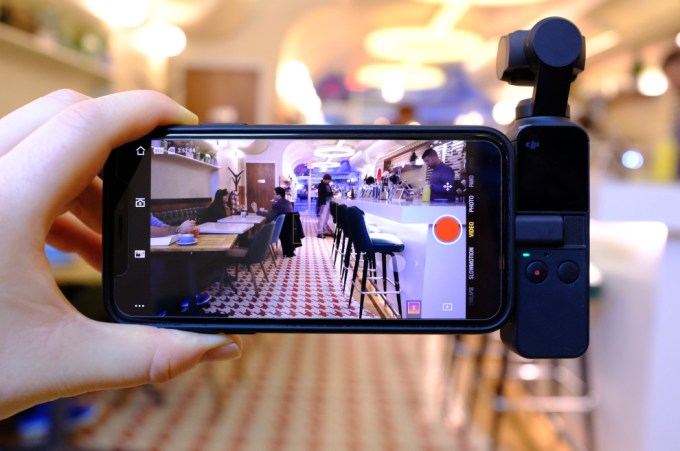
DJI Osmo Pocket

I wanted to dislike the Osmo Pocket. I mean, $349 for a gimbal with a built-in screen is pretty steep by any measure — especially given the fact that the drone maker has much cheaper and more professional options. After an afternoon with the Pocket, however, I was hooked.

The software takes a little getting used to, but once you’ve mastered it, you’re off to the races, using many of the same tricks you’ll find on the Mavic line. Time-lapse, FaceTrack and the 10 Story Mode templates are all impressive and can help novices capture compelling video from even the most mundane subject matter.
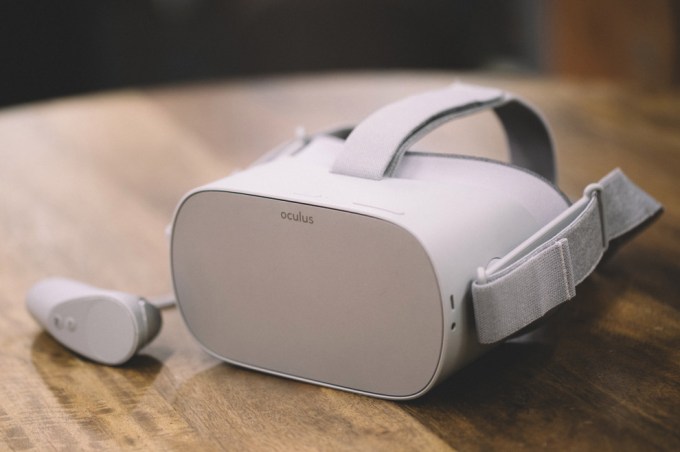
Oculus Go

The most recent wave of VR headsets has been split between two distinct categories. There are the high-end Rift and Vives on one side and the super-low-cost Daydreams and Gear VRs on the other. That leaves consumers in the unenviable position of choosing between emptying the bank account or opting for a sub-par experience.

Oculus’ Go headset arrived this year to split the difference. In a time when virtual reality seems at the tail end of its hype cycle, the $199 device offers the most compelling case for mainstreaming yet.

It’s a solid and financially accessible take on VR that shows that the category may still have a little life left in it yet.
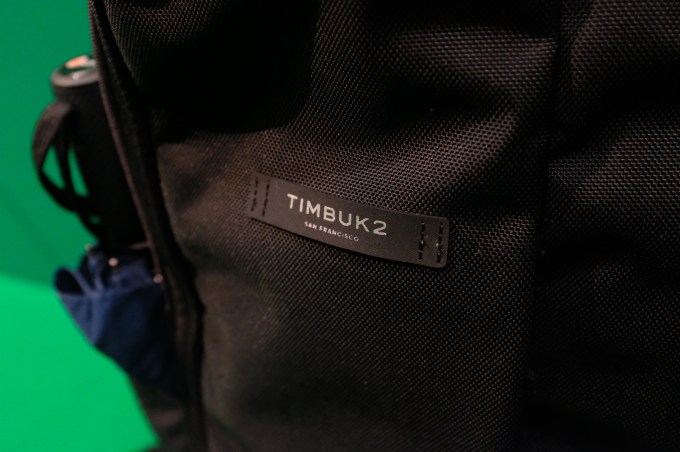
Timbuk2 Never Check Expandable Backpack

Granted, it’s not a gadget per se, but the Never Check is the best backpack I’ve ever owned. I initially picked it up as part of a Gift Guide feature I was writing, and I’ve since totally fallen for the thing.

As someone who spends nearly half of his time on the road these days, the bag’s big volume and surprisingly slim profile have been a life saver. It’s followed me to a Hong Kong hostel and a Nigerian hotel, jammed full of all the tech I need to do my job.

It’s also unassuming enough to be your day to day bag. Just zip up one of those waterproof zippers to compress its footprint.

Happy Hacking Keyboard Professional 2

Like most nerds, I have more keyboards than friends. In 2018 I gave mechanical keyboards a chance. Now, at the end of the year, I’m typing on a Happy Hacking Keyboard Professional 2. It’s lovely.

This keyboard features Topre capacitive 45G switches. What does that mean? When typing, these switches provide a nice balance of smooth action and tactile feel. There are a handful of mechanical switches available, and after trying most of them, this switch feels the best to me. The Topre capacitive switch is available in a handful of keyboards, but I like the Happy Hacking Keyboard the best.

The HHK has been around in various forms since 1996, and this latest version retains a lot of the charm, including dip switches. Everyone loves dip switches. This version works well with Macs, has two USB ports and is compact enough someone could throw it into a bag. Starting just last month, the keyboard is available in the U.S. through Fujitsu, so buyers don’t have to deal with potentially shady importers.

The Worst
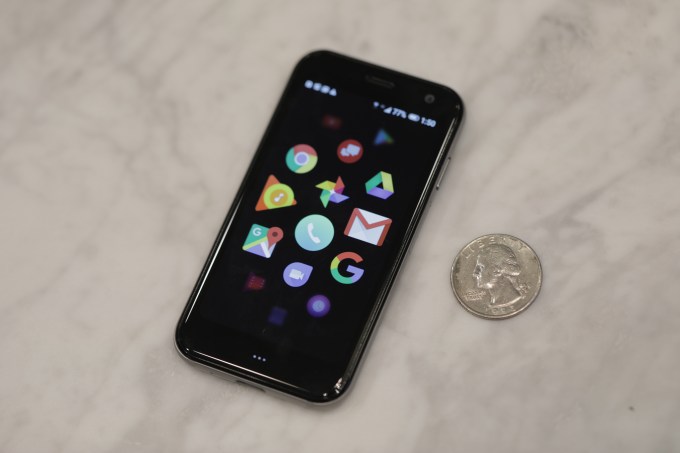
Palm

The Palm is the kind of device you really want to like. And I tried. Hell, I took the thing to Africa with me in hopes that I’d be able to give it some second life as an MP3 player. But it fell short even on that front.

This secondary smartphone is a device in search of a problem, appealing to an impossibly thin slice of consumer demographics. It’s definitely adorable, but the ideal consumer has to have the need and money for a second display, no smartwatch and an existing Verizon contract. Even then, the product has some glaring flaws, from more complex user issues to simple stupid things, like a lack of volume buttons.

It’s easy to forgive a lot with a fairly well-designed first-generation product, but it’s hard to see where the newly reborn company goes from here. Palm, meet face.
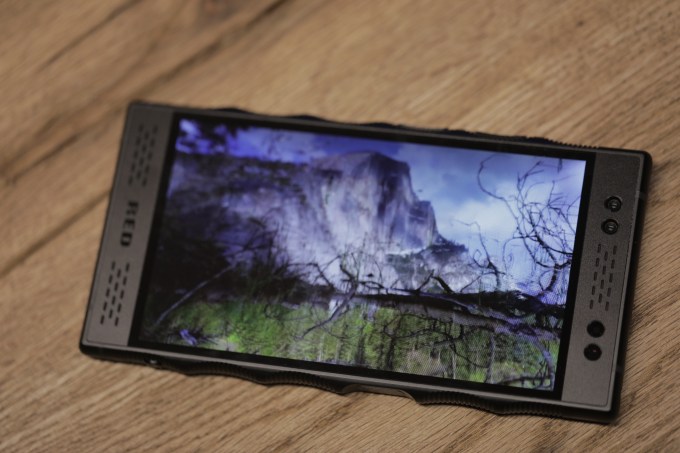
Red Hydrogen One

Where to start? How about the price? Red’s first foray into the smartphone space starts at $1,293 (or $1,595 if you want to upgrade your aluminum to titanium). That price will get you a middling phone with an admittedly fascinating gimmick.

After what seemed like years of teasers, the Hydrogen One finally appeared in October, sporting a big, metal design and Rambo-style serrated edges. The display’s the thing here, sporting a “nano-photonic” design that looks a bit like a moving version of those holographic baseball cards we had as kids.

I showed it to a number of folks during my testing period, and all found it initially interesting, then invariably asked “why?” I’m still having trouble coming up with the answer on that one. Oh, and a few told me they became a touch nauseous looking at it. Can’t win ’em all, I guess.
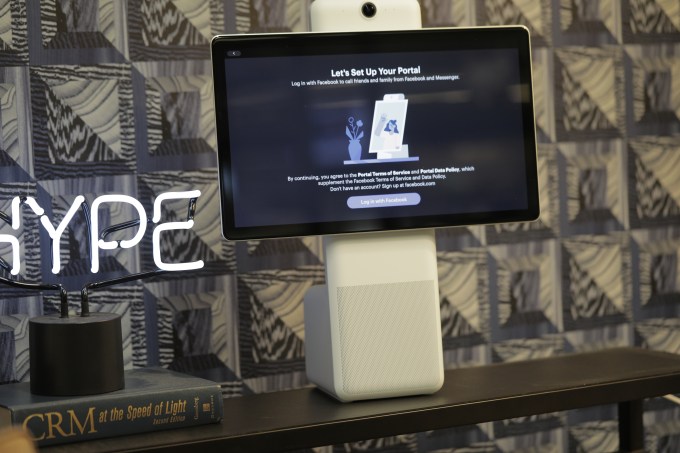
Facebook Portal

“Why?” is really the overarching question in all of these worst devices. It’s not as if the Portal was a bad product. The design of the thing is actually pretty solid — certainly it looks a lot nicer than the Echo Show. And while it was initially lacking in features, Facebook has made up for that a bit with a recent software update.

The heart of the question is more about what Portal brings to the table that the Echo Show or Google Home Hub don’t. It would have to be something pretty massive to justify bringing a Facebook-branded piece of hardware into one’s living room, especially in light of all of the privacy concerns the social media site has dealt with this year. There’s never been a great time for Facebook to launch a product like this, but somehow, now feels like the worst.

Portal delivers some neat tricks, including impressive camera tracking and AR stories, but it mostly feels like a tone-deaf PR nightmare.

PlayStation Classic
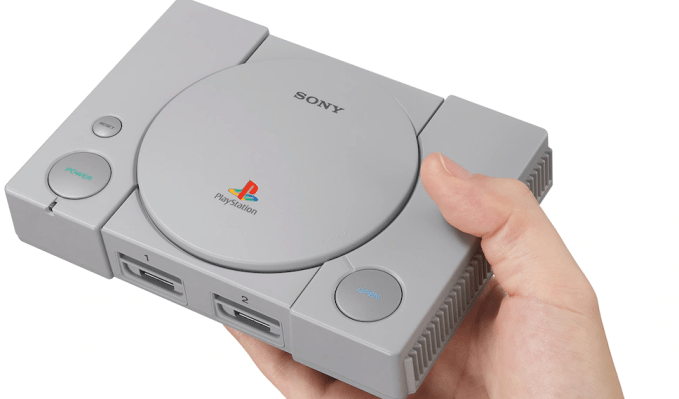
1: Half the games are PAL ports and do not run well on U.S. TVs
2: Missing classics like Gran Turismo, Crash Bandicoot and Tomb Raider
3: Doesn’t include a power adapter
4: Only one suspend point
5: This product makes me angry



Go to Source
Author: Brian Heater

Join us in Las Vegas during CES

We will be holding a small event during CES in Las Vegas and we want to see you! We’re looking to meet some cool hardware and crypto startups, so the good folks at Work In Progress have opened up their space to us and 200 of you all to hold a meetup and pitch-off.

The event will be held at Work In Progress, 317 South 6th Street on Wednesday, January 9, 2019 between 6:00 PM – 9:00 PM PST.

There are only 200 tickets, so if you want to come please pick one up ASAP. The meetup is open to everyone, so head over if you’d like to talk tech. You can pick up a ticket here.

If you’d like to pitch at the event I’ll be picking 10 companies that will have three minutes to pitch without slides. Because this is a hardware event I recommend bringing a few of your items to show off. If you’d like to pitch, fill this out and I will contact those who will be coming up on stage.

See you in Vegas!


Go to Source
Author: John Biggs

IBM Research develops fingerprint sensor to monitor disease progression

IBM today announced that it has developed a small sensor that sits on a person’s fingernail to help monitor the effectiveness of drugs used to combat the symptoms of Parkinson’s and other diseases. Together with the custom software that analyzes the data, the sensor measures how the nail warps as the user grips something. Because virtually any activity involves gripping objects, that creates a lot of data for the software to analyze.

Another way to get this data would be to attach a sensor to the skin and capture motion, as well as the health of muscles and nerves that way. The team notes that skin-based sensors can cause plenty of other problems, including infections, so it decided to look at using data from how a person’s fingernails bend instead.

For the most part, though, fingernails don’t bend all that much, so the sensor had to be rather sensitive. “It turns out that our fingernails deform — bend and move — in stereotypic ways when we use them for gripping, grasping, and even flexing and extending our fingers,” the researchers explain. “This deformation is usually on the order of single digit microns and not visible to the naked eye. However, it can easily detect with strain gauge sensors. For context, a typical human hair is between 50 and 100 microns across and a red blood cell is usually less than 10 microns across.”

In its current version, the researchers glue the prototype to the nail. Because fingernails are pretty tough, there’s very little risk in doing so, especially when compared to a sensor that would sit on the skin. The sensor then talks to a smartwatch that runs machine learning models to detect tremors and other symptoms of Parkinson’s disease. That model can detect what a wearer is doing (opening a doorknob, using a screwdriver, etc.). The data and the model are accurate enough to track when wearers write digits with their fingers.

Over time, the team hopes that it can extend this prototype and the models that analyze the data to recognize other diseases as well. There’s no word on when this sensor could make it onto the market, though.


Go to Source
Author: Frederic Lardinois

A startup’s guide to CES

The Consumer Electronics Show, like Burning Man, is a massive event in the middle of the desert. Also like Burning Man it is populated by some of the greatest minds in technology. But, unlike Burning Man, these people are all dressed and only a few of them are on hard psychotropic drugs. Also CES is mostly inside.

Here are some tips and tricks I’ve collected over a long career spent staying in awful hotels and wandering around massive conference halls full of things that won’t be released for another year. Hopefully they can be of some use.

Why should you go?

CES is not about innovation. It is about networking with potential buyers. The show is massive and it is popular primarily because it is in Las Vegas, a city so nice they made the movie Casino about it. But the days of you and your brother being dragged out into the corn and beaten to death are gone and what’s left is an adult playground of 24-hour craps and bad drinks.

You are not going to CES to drink and gamble, however. As a startup you are going there to find customers or get press. If you have the hustle and the will you can easily meet hundreds of potential buyers for your technology, including some big names who usually buy massive booths to show off their “innovative” systems. When you go, bypass the armed booth guards who stand at the front directing traffic and go talk to the most bored person at the booth. This is usually some middle manager who was wrangled into telling people about his company’s most boring innovation. Talk to him or her like a human being, offer to take them out for a coffee, do whatever it takes to get a warm lead inside that massive company. Repeat this hundreds of times.

CES costs $300 and the tickets to LV and the hotel will cost far more. Be sure you’re not cash-poor before you go. This isn’t a Hail Mary for your startup, it’s a step along the way.

If you don’t think you can pull off this sort of social engineering I describe, please don’t go to CES, or instead send the most personable member of the team. It’s too big and there are already enough nervous nerds walking around.

You haven’t planned yet?

So you’ve decided to go. Do you have tickets? A hotel? At least an Airbnb? It’s pretty much too late right now to get any of those things in time for January 8th, but you can try.

Further, if you have a friend who lives there, go stay with them. The hotels gouge you during this week. Check out the Excalibur, arguably one of the worst on the strip. Right now, you can stay at this illustrious medieval-themed hotel for $25:

Need a smoke-smelling room abutting a flying buttress topped with an animatronic Merlin around January 9? Fear not, my liege!

The best time to book for CES is a year before CES. The second best time is never.

Maybe you’re going to buy a booth. I wouldn’t, but go ahead and give it a try. I like what my friend Tommy here did. Instead of going through one of the countless staffing agencies in Las Vegas he put out a general call for help and he got plenty of responses. Lots of people would be willing to go to Las Vegas to help out for not much cash.

Do everything in your power to stay as close to the Convention Center or Sands (the hall with all the startups) as possible. It is a living hell trying to get around Las Vegas and you’ll thank me later for every hour in a cab line you save for yourself.

Go to where the action is

If you are trying to get press for your product launch then you came to the wrong place. First, if you’re going to CES to launch then you MUST LAUNCH AT CES. I’ve seen too many idiotic startups who flew in, paid for everything and then told the world they’d launch in like two months or whenever Sven back at the main office in Oslo was done putting the finishing touches on the device driver. If you’re not ready to ship don’t go.

Do not spam journos about your product unless you know them. Your emails will fall into a black hole.

Further, instead of getting a booth at the show I recommend getting a booth at Showstoppers or Digital Experience. The events cost about $8,000 for a booth and are approximately the same. They are held before the main event and they’re where all the journalists go to get free prime rib and ignore you. It’s also where all of the small market journalists and the weird freelancers who wear fishing vests and live in Scranton wander around, so be ready to do a little target acquisition.

Want my advice? Put one person at your booth who can tell your story in two minutes exactly. That person must tell that story as many times as possible and give the odd journalist who will stand there asking dumb questions for an hour the stiff arm whenever someone else comes up. Maximize your message dispersal. Also, if you have product, then have about 20 pieces there ready to give away to Engadget, Gizmodo, The New York Times, The Verge and the like. Don’t give anything to me if I see you. I don’t want that crap in my suitcase.

Now for the ingenious part. Find the most popular food item at the buffets and stand next to it. When a hungry journo comes up to grab a spaghetti taco or whatever, scope out their badge and offer to walk them over to your booth. They’ll harrumph a little but unless they are one of the countless millennial reporters who believe they have to live-blog these events they have nothing else to do that night except get drunk on gin and tonics. Drag them over to your booth and give them the two-minute pitch. They’ll be so busy eating they won’t be able to ask questions. Write down their email address — don’t ask them for a card — and give them yours. Then email the heck out of them for the next few days to remind them about your launch.

Further, never rent a suite and invite journos to come to you. They have enough trouble getting out of bed, let alone getting a cab to your dumb room. If a journo wants to meet, you MUST go to them. Don’t make them come to you.

Manage expectations

Like Burning Man, CES is the worst show on the planet held in one of the most unforgiving habitats known to man. As long as you accept these two points you will be fine. You will not “win” CES. At best, CES will give you a kick in the pants in regard to your competition and actual value to the world. Want to know if you have customer fit? Go to CES and meet your customers. Want to see if journalists care about your idea? Pitch them when they are fat and sassy at CES and feeling powerful. That experience will humble even the biggest ego.

Remember: The world is a cold, uncaring place and this is doubly true at CES.

Be careful with PR people

See that animated GIF above? That’s how I manage my CES email. I scroll through the subject lines, look for people I know, then select all unread and delete them. One of the worst things about CES is that the letters “CES” show up in multiple words and, barring writing a regular expression, it is very difficult to filter them out; 99 percent of your CES emails will go unread.

So should you hire a PR person? Yes and no. If you hire them to just send emails then you might as well burn your money. However, if that PR person can lead you around the show and introduce you to folks who can help you get your story out then it might be worth it. Sadly, there is no way to tell how incompetent a PR person is until you get on the ground with them. I know a few I can recommend. Email me. Otherwise be very careful.

Don’t go

Look, CES sucks. I’m not going to lie to you. It’s too big, everyone there is distracted by potential blackjack winnings, and trying to get noticed or launch at CES is akin to holding a poetry reading in the middle of a rock concert: nobody is paying attention and you actually may annoy more people than you reach. It’s your call whether or not you want to give it a try, but be ready to hustle. Besides, there’s always next year.

Bonus Tip: Buy a humidifier

I learned this trick from Brian Lam, formerly of Gizmodo: when you land go to Walgreens and buy a very cheap humidifier. Put it in your room and leave it on all day. Las Vegas air is very dry and you’re almost guaranteed to get chapped lips and a cough if you don’t have at least one spot where it doesn’t feel like you’re on the surface of Mars.

This was us at CES 2008 or so. We were such sweet summer children.


Go to Source
Author: John Biggs

FCC fines Swarm Technologies $900K over unauthorized satellite launch

Back in March came the surprising news that a satellite communications company still more or less in stealth mode had launched several tiny craft into orbit — against the explicit instructions of the FCC. The company, Swarm Technologies, now faces a $900,000 penalty from the agency, as well as extra oversight of its continuing operations.

Swarm’s SpaceBEEs are the beginning of a planned constellation of small satellites with which the company intends to provide low-cost global connectivity.

Unfortunately, the units are so small — about a quarter the size of a standard cubesat, which is already quite tiny — that the FCC felt they would be too difficult to track, and did not approve the launch.

SpaceBEEs are small, as you can see. Credit: Swarm Technologies

Swarm, perhaps thinking it better to ask forgiveness than file the paperwork for permission, launched anyway in January aboard India’s PSLV-C40, which carried more than a dozen other passengers to space as well. (I asked Swarm and the launch provider, Spaceflight, at the time for comment but never heard back.)

The FCC obviously didn’t like this, and began an investigation shortly afterwards. According to an FCC press release:

The investigation found that Swarm had launched the four BEEs using an unaffiliated launch company in India and had unlawfully transmitted signals between earth stations in Georgia and the satellites for over a week. In addition, during the course of its investigation, the FCC discovered that Swarm had also performed unauthorized weather balloon-to-ground station tests and other unauthorized equipment tests prior to the small satellites launch. All these activities require FCC authorization and the company had not received such authorization before the activities occurred.

Not good! As penance, Swarm Technologies will have to pay the aforementioned $900,000, and now has to submit pre-launch reports to the FCC within five days of signing an agreement to launch, and at least 45 days before takeoff.

The company hasn’t been sitting on its hands this whole time. The unauthorized launch was a mistake to be sure, but it has continued its pursuit of a global constellation and launched three more SpaceBEEs into orbit just a few weeks ago aboard a SpaceX Falcon 9.

Swarm has worked to put the concerns about tracking to bed; in fact, the company claims its devices are more trackable than ordinary cubesats, with a larger radar cross section and extra reflectivity thanks to a Van Atta array (ask them). SpaceBEE-1 is about to pass over Italy as I write this — you can check its location live here.


Go to Source
Author: Devin Coldewey

UK airport restarts some flights after drone shutdown chaos

The U.K.’s second busiest airport, Gatwick, reopened its runway early this morning after a day of shutdown triggered after drones were repeatedly spotting flying nearby.

In a media statement issued at 08:00 GMT this morning, the airport said it reopened the runway at 06:00 and that a “limited number” of aircraft are now taking off and landing.

Though it also warned the rate is “very restricted,” with just a few runway movements per hour.

Police units have been searching for the unknown drone operator/s since yesterday, so far without success. Last night military support was drafted in to help with the ongoing hunt.

Passengers are still being advised by Gatwick to check the status of their flight with their airline before travelling to the airport.

Gatwick said it has been working with partners in government agencies and the military overnight to “put measures in place which have provided the confidence we needed to re-open the runway and ensure the safety of passengers, which remains our priority.”

“We continue to provide welfare and information to all disrupted passengers who are at the airport and have had teams in throughout the night. Our priority today is to get our operation back on track so that people can be where they need to be for Christmas, and we will update as more information becomes available throughout the day,” it added.

The Guardian reports comments made this morning by the transport secretary, Chris Grayling, speaking on BBC Breakfast. He said there had been around 40 sightings of what are thought to be “small number of drones” while the airport was closed.

“This kind of incident is unprecedented anywhere in the world, the disruption of an airport in this way,” Grayling told the broadcaster. “We’re going to have to learn very quickly from what’s happened.

“I plan to convene discussion with other airports around the U.K. very quickly indeed so that they know what’s happened, they understand what lessons need to be learned, and we’ve put in place every measure we possibly can to ensure this can’t happen again.”

Aviation minister, Baroness Sugg, faced a barrage of critical questions over the incident in the House of Lords yesterday.

Robotics experts have also slammed the government for complacency over the technology, saying it has failed for years to listen to concerns about how drones could be misused.

The U.K. amended existing laws this year to bring in drone flight restrictions, barring flights within 1 km of airports and above 400 ft.

A charge of flouting the rules and flying drones recklessly or negligently acting in a manner likely to endanger an aircraft or a person in an aircraft carries a penalty of up to five years in prison or an unlimited fine or both.

But critics have said the regulations are too lax and that more needs to be done to ensure drones cannot be used to cause disruption to infrastructure and services at massive scale.


Go to Source
Author: Natasha Lomas